
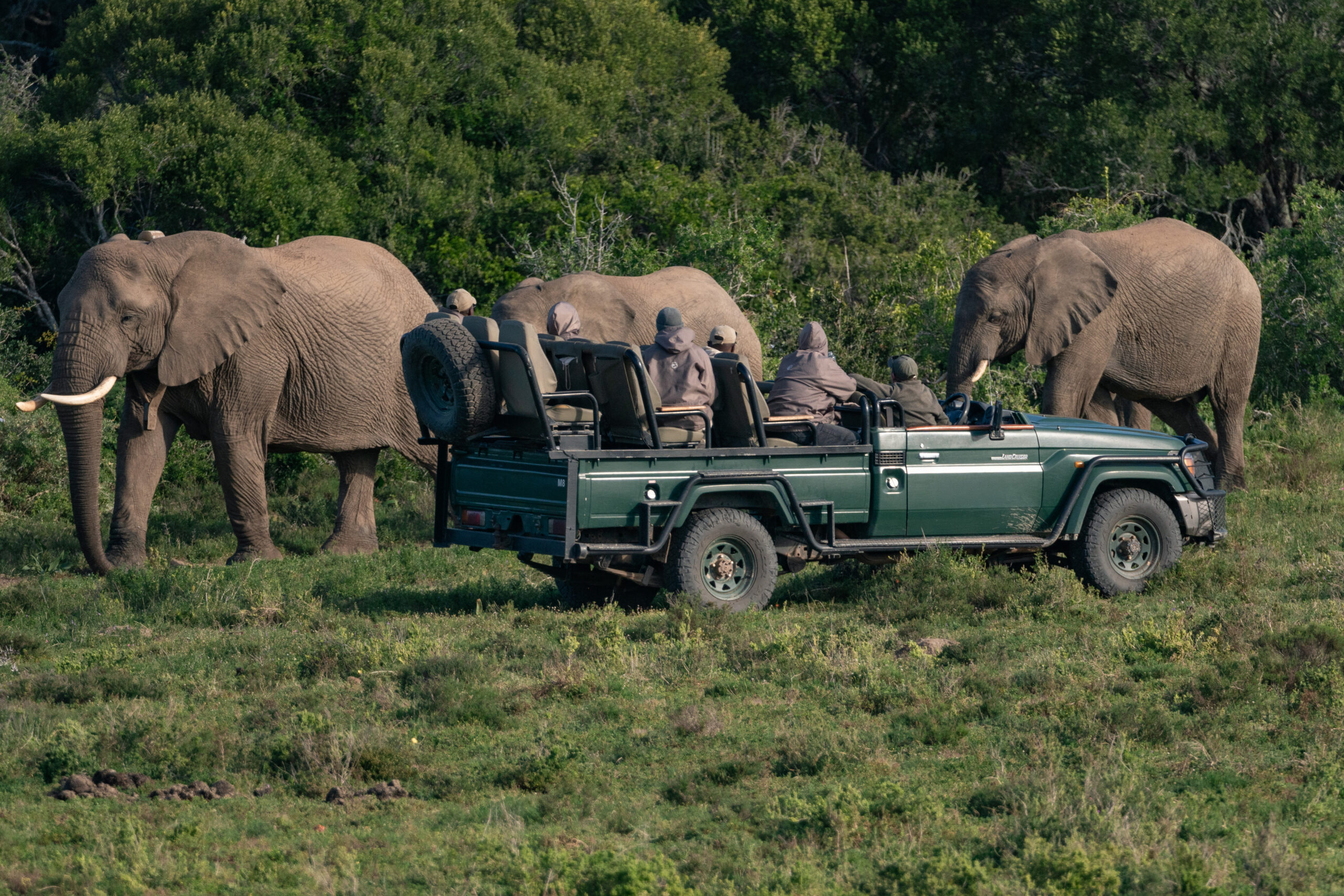
Africa’s wildlife tourism industry is one of the most powerful economic engines on the continent, and elephants stand at its heart. From the floodplains of Botswana’s Okavango Delta to the open savanna of Kenya’s Amboseli, elephants are more than a conservation symbol. They are a measurable, irreplaceable driver of economic value. Understanding this relationship is essential for anyone invested in Africa’s future, including the businesses and partners who help make conservation possible.
A Multi-Billion-Dollar Industry Built on Wildlife
Wildlife tourism is the backbone of Africa’s tourism economy, contributing approximately $29.3 billion annually to Africa’s GDP, supporting roughly 3.6 million jobs, and accounting for an estimated 36% of Africa’s total tourism GDP. In individual countries, the scale is equally striking. South Africa alone employs 542,000 people in the tourism sector, with international receipts totaling US$4.77 billion annually. In Botswana, home to some of Africa’s largest elephant populations, tourism contributes an estimated 10–13% of GDP, heavily tied to wildlife.
These figures reflect a well-established pattern across the continent: where wildlife thrives, economies follow.
THE ECONOMICS OF ELEPHANTS AT A GLANCE
$29.3B
Annual Contribution of Wildlife Tourism to Africa’s GDP
AIP / Inside Science
3.6M
Jobs supported by wildlife tourism across Africa
AIP / Inside Science
+371%
Potential increase in tourist visits per additional elephant in a protected area
Naidoo et al., 2016
$25M
Lost annually to tourism due to elephant poaching
Naidoo et al., 2016
Elephants: The Primary Driver of Safari Demand
Within this vast industry, elephants hold a singular position. Research published in the Journal of Ecotourism identifies them as among the most desired animals for wildlife tourists in southern Africa, a preference that directly shapes where visitors travel, how long they stay, and how much they spend. Studies from Kenya’s Amboseli National Park confirm the elephant as a primary attraction, outranking nearly all other megafauna in visitor motivation. Elephants are central to the iconic “Big Five,” the shortlist of species that have long defined the safari experience, and are described in the literature as the “bedrock for wildlife tourism growth” in Southern Africa.
The economic relationship has been quantified precisely: each additional elephant in a protected area can increase tourist visits by up to 371%. Conversely, elephant poaching costs Africa’s tourism sector an estimated $25 million USD annually in lost revenue. This figure does not capture the downstream erosion of visitor demand, destination appeal, or long-term investment.
In many of Africa’s most celebrated destinations, this dynamic plays out at scale. Botswana has built its high-value, low-volume tourism model around elephant-rich landscapes in the Okavango Delta and Chobe. Elephants define Kenya’s Amboseli National Park. South Africa’s Big Five model depends on them. In each case, elephant conservation and economic viability are not parallel goals; they are the same goal.
GLOBAL ECOTOURISM MARKET
$545B
Estimated size of the global ecotourism market in 2026
Industry Research Biz, 2026
$1.43T
Projected size of the global ecotourism market by 2035
Industry Research Biz, 2026
11.3%
Annual ecotourism market growth rate (CAGR 2026–2035)
Industry Research Biz, 2026
Africa at the Heart of a Global Ecotourism Boom
These dynamics are unfolding against the backdrop of a sweeping global shift in how people travel. The global ecotourism market was estimated at USD 545 billion in 2026 and is projected to reach USD 1.43 trillion by 2035, growing at a compound annual rate of 11.3%. Ecotourism destinations represent nearly 18% of total international travel, growing across wildlife reserves, forest parks, and marine areas. Africa, with its unmatched concentration of megafauna, protected landscapes, and community-based conservation models, is exceptionally well-positioned to capture a significant share of that growth.
The motivations of ecotourists align precisely with what Africa’s elephant landscapes offer. Adventure and wildlife tourism account for 52% of total ecotourism activities, the single largest category in the market. 44% of ecotourists actively choose destinations that support wildlife preservation, meaning conservation credibility is a commercial differentiator that shapes booking decisions at scale. For these travelers, the presence of elephants in a healthy, well-protected landscape is the signal that drives destination choice.
Ecotourism’s growth is also reshaping who benefits. 43% of travelers choose experiences that directly benefit local populations, a shift that is directly relevant to elephant conservation. In the landscapes where elephants roam, local communities bear the greatest costs of coexistence. When ecotourism revenue flows to those communities, elephants transform from a burden into a shared asset, and communities become the most committed conservation partners.
36% of ecotourism trips are nature-based, 27% focus on marine activities, and 21% center on cultural exploration, but across all categories, the underlying driver is authenticity. Ecotourists seek functioning ecosystems and genuine wildlife encounters. Africa’s elephant-rich landscapes deliver exactly that. The global ecotourism boom represents a generational opportunity, but only if elephant populations remain healthy enough and landscapes intact enough to meet the demand that’s already building.
WHAT ECOTOURISTS WANT (AND WHY IT MATTERS FOR ELEPHANTS)
52%
Of ecotourism activities are adventure and wildlife tourism
Industry Research Biz, 2026
44%
Of ecotourists choose destinations that actively support wildlife preservation
Industry Research Biz, 2026
43%
Of travelers choose experiences that directly benefit local communities
Industry Research Biz, 2026
